










Japanese-Style Kimonos and Yukata for Men — Traditional Inspiration, Modern Craft


The Japanese Kimono for Men: A Garment Built on a Thousand Years of Craft
The kimono is one of the most recognizable garments in human history — and one of the most misunderstood. In the West, it is often seen as costume, as occasion wear, as something worn once and photographed. In Japan, it has always been something entirely different: a daily language of identity, status, season and intention, spoken through fabric and pattern by everyone from imperial courtiers to Edo-period craftsmen.
The men's japanese kimono has its own distinct history within that tradition. Where women's kimono evolved toward elaborate decoration and complex layering, the men's kimono moved in the opposite direction — toward restraint, toward depth of material rather than surface ornament, toward a silhouette so precisely proportioned that it has remained essentially unchanged for centuries. The wide sleeves. The deep crossover collar. The floor-length fall anchored by the obi at the waist. These are not arbitrary choices. They are the result of generations of refinement, each detail earning its place through use and time.
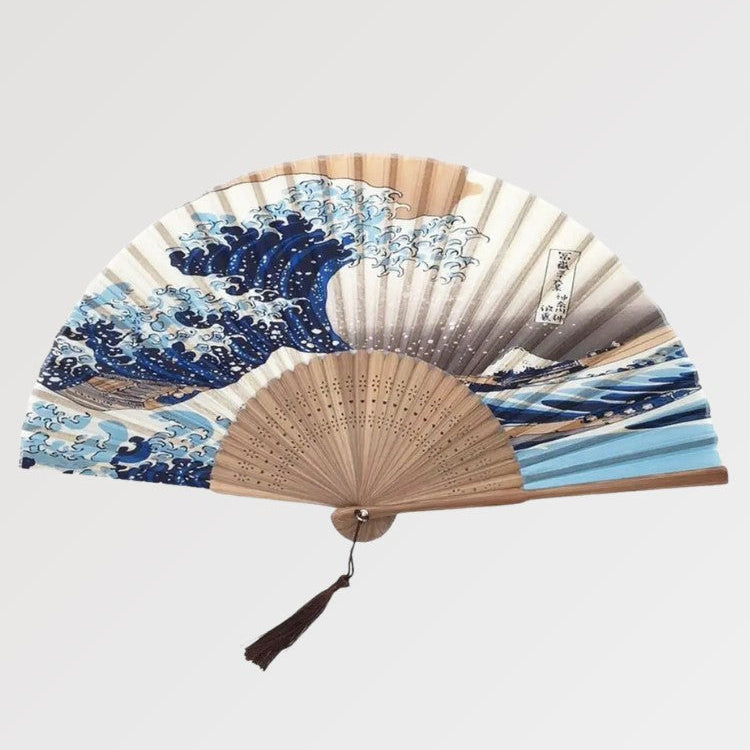
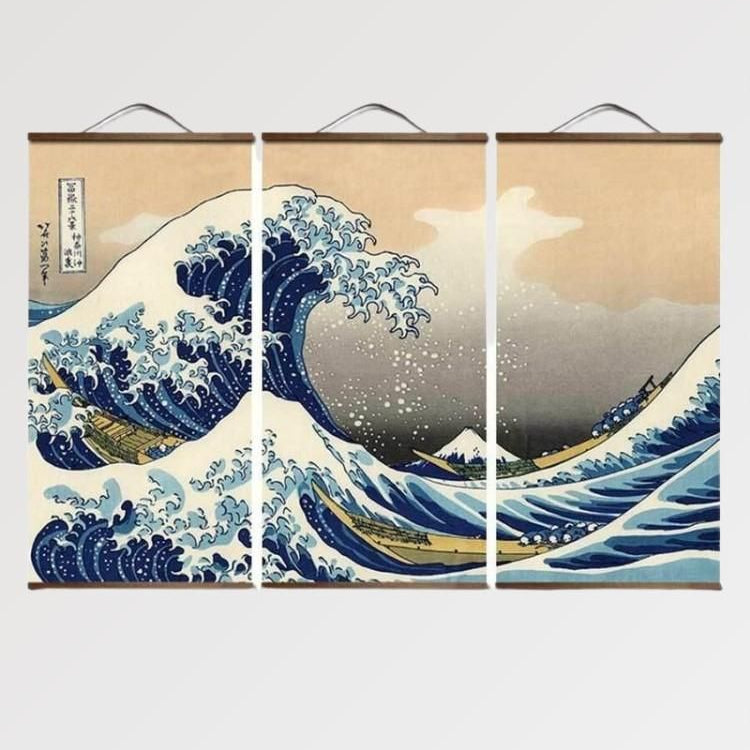
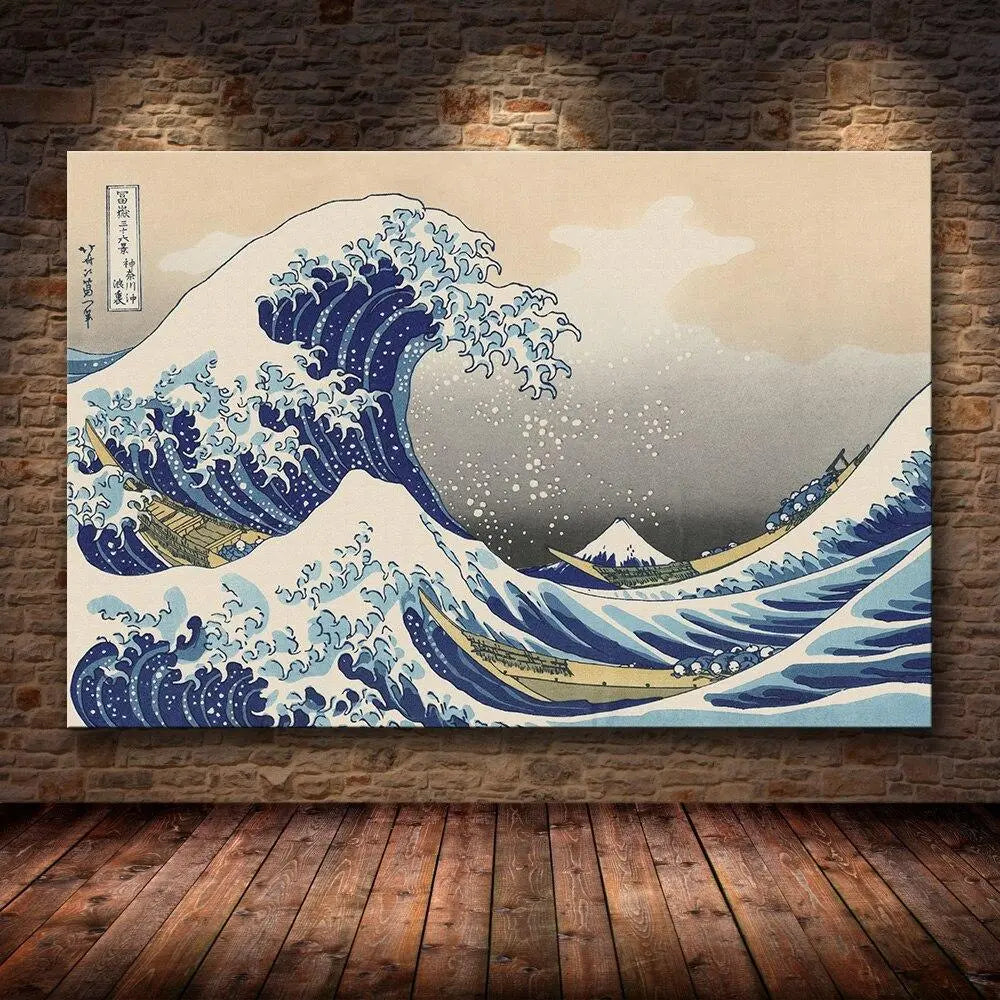
The patterns that appeared on men's japanese kimonos were equally deliberate. The asanoha geometric star, woven into fabric as a symbol of resilience. The hishigata diamond lattice, worn by those who understood that geometry carries its own authority. The enso brushstroke circle, borrowed from Zen calligraphy and translated into textile. The great wave, the bamboo, the dragon — each motif arriving with centuries of meaning already attached, worn not as decoration but as statement.
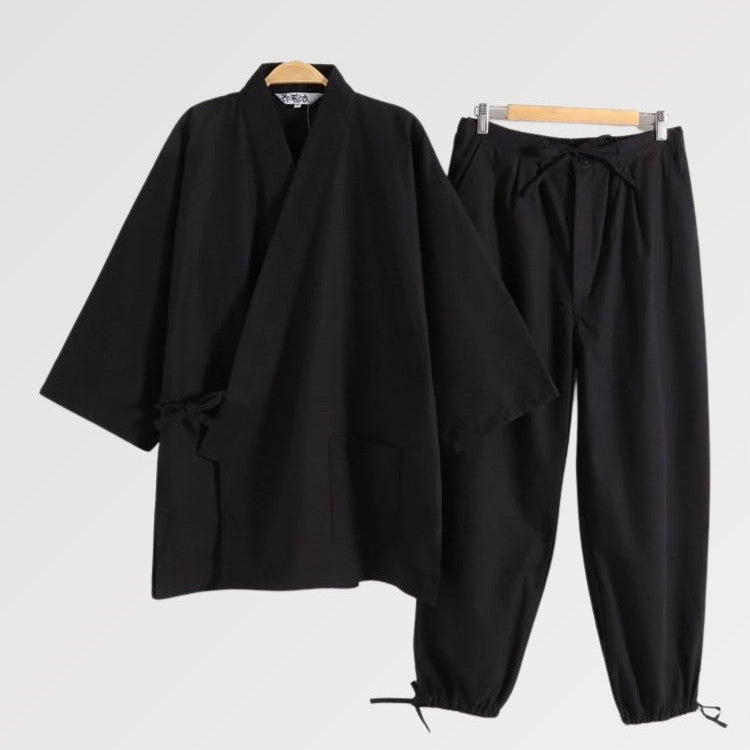
The yukata emerged from within this tradition as the kimono's lighter counterpart — woven cotton rather than silk, worn in summer, at festivals, at the end of a long warm day. Where the formal kimono speaks of ceremony, the men's yukata speaks of ease and pleasure — the same silhouette, the same obi, the same deep Japanese aesthetic, worn with the relaxed confidence of a garment made for living in rather than looking at.
What the Japan Clothing collection brings to this tradition is not reinvention but continuation — japanese-style kimonos and yukata for men designed to carry these patterns and this silhouette into the present, worn by men who understand that the most powerful thing a garment can do is connect you to something larger than the moment you're standing in.
Kimono or Yukata: Understanding the Difference
The question comes up every time. A man discovers Japanese dress, falls for the silhouette, starts looking at options — and immediately encounters two words used almost interchangeably, yet pointing at two genuinely different things. Kimono or yukata. The distinction matters, and it is simpler than it first appears.
The kimono is the older and more formal of the two. Traditionally crafted from silk or fine synthetic fabric with a fluid drape, it is structured for ceremony — worn at weddings, cultural celebrations, formal gatherings where the weight and presence of the garment is part of its meaning. A men's japanese kimono is typically floor-length, wide-sleeved, worn with a substantial obi and often with additional undergarments that contribute to the layered formality of the overall look. It is a garment that asks something of the person wearing it — attention, intention, a certain kind of presence.
The men's yukata is the kimono's lighter, more democratic counterpart. Born from the cotton bathing robes of medieval Japan and refined over centuries into a garment worn at summer festivals, outdoor gatherings and warm evenings, the yukata shares the kimono's essential silhouette — the crossover collar, the wide sleeves, the floor-length cut, the obi at the waist — but carries it in breathable woven cotton rather than formal silk. It is easier to wear, easier to move in, and designed for exactly the kind of warm-weather living that calls for a garment with both comfort and beauty.
In practice, for the modern man in the West, the distinction softens considerably. Both the japanese kimono and the mens yukata are worn for cultural events, photoshoots, festivals, costume occasions and personal style — the choice between them becomes less about strict formality and more about fabric weight, pattern preference and the specific aesthetic you want to project.
In the Japan Clothing collection, both are present and both are treated with equal seriousness. The kimonos — 'Kurogane', 'Hanamon', 'Tatewaku', 'Ryûchiku' and others — bring the weight and pattern richness of traditional japanese kimono design. The yukata — 'Tsukinami', 'Hoshiba', 'Asanugi', 'Tamahari' and the full plain-woven family — bring the ease and breathability of authentic mens yukata craft. Understanding which you are drawn to is the first step toward finding the right garment. Both roads lead somewhere worth going.
How to Choose Your Men's Japanese Kimono: Pattern, Occasion, Style
There is no wrong choice in this collection. But there is always a right one — the garment that fits not just your body but the occasion you have in mind, the aesthetic you want to project, the story you want the fabric to tell. Here is how to find it.
Start with pattern.
Pattern is the most immediate decision, and in Japanese dress it carries more meaning than in almost any other textile tradition. The geometric patterns — 'Asanugi' with its sacred asanoha star, 'Hishigata' with its ancient diamond lattice, 'Ichihane' with its ichimatsu checkerboard — speak the language of Japanese craft tradition directly. They are for the man who wants his garment to carry historical weight, who appreciates the intelligence of a pattern refined over centuries. The painterly and abstract patterns — 'Ensogawa' with its Zen enso circles, 'Fudegaki' with its calligraphy brushstrokes, 'Suibokuga' with its ink wash composition — are for the man drawn to Japanese art as much as Japanese dress. The botanical patterns — 'Kurohana', 'Shinryoku', 'Hoshiba', 'Aionami' — bring the natural world into the silhouette with the quiet poetry that Japanese textile art does better than any other tradition on earth.
Then consider occasion.
For a Japanese cultural festival, a formal gathering or a ceremonial event, reach for the full traditional japanese kimono — floor-length, wide-sleeved, worn with the obi properly tied. 'Tatewaku', 'Hanamon', 'Koniya' and 'Ikkamari' are built for exactly these moments, their pattern density and fabric presence carrying the weight that formal occasions demand. For a summer outdoor event, a casual gathering or everyday personal style, the mens yukata is the natural choice — lighter, more breathable, just as beautiful. 'Tsukinami', 'Tamahari', 'Murayama' and the plain-woven family wear with the easy confidence of garments made for living in.
Finally, think about colour and tone.
The Japan Clothing collection is built almost entirely in a palette of deep blues, blacks, greys and navies — the colours of Japanese textile tradition at its most masculine and most enduring. If you want maximum visual impact, the high-contrast pieces deliver it: 'Tsukinami' in pure black with white wave medallions, 'Hekinan' with its red koi against black satin, 'Tamahari' in vivid cobalt. If you prefer depth over drama, the tone-on-tone pieces — 'Kurogane', 'Aionami', 'Shinryoku' — reward the closer look, their pattern revealing itself gradually to those who take the time.
For the man who wants to start simply, the plain-woven yukata family — 'Akiruno', 'Kiyose', 'Kurayoshi', 'Murayama', 'Nagato', 'Hokuto' — offers six studies in pure colour and clean line. No pattern to navigate, no motif to interpret. Just the silhouette, the fabric and the colour, which in Japanese dress has always been more than enough.
The Japan Clothing Difference: Japanese-Style Design, Crafted for the Modern Man
There are many places on the internet to buy a japanese kimono. Most of them look the same — stock photographs taken against white backgrounds, generic product names, descriptions that say nothing about what the garment actually is or where its design comes from. The kimono arrives in a plastic bag and looks exactly like the photograph, which looked exactly like every other photograph on every other site selling the same thing from the same source.
Japan Clothing was built as a deliberate alternative to that experience.
Every garment in this collection has been named for what it carries — a Japanese word that describes the pattern, the motif, the feeling of the fabric. 'Tsukinami' for the moon and the wave. 'Kurogane' for black metal. 'Ensogawa' for the Zen circle and the river. 'Ryûchiku' for the dragon and the bamboo. These are not marketing names invented to sound exotic. They are descriptions, rooted in the visual language of the garment itself, chosen to connect the person wearing it to the tradition it comes from.
Every product in this collection has been photographed in a dedicated studio shoot — the same model, the same lighting, the same considered presentation across every single piece. Not because photography is decoration, but because a garment of this quality deserves to be seen properly. The difference between a product photograph and a garment photograph is the difference between information and experience. Japan Clothing chose experience.
The collection itself has been built with the same attention. Patterns were selected for their connection to authentic Japanese textile tradition — asanoha, ichimatsu, tatewaku, enso, kamon, tate-jima — not because they are fashionable but because they are meaningful, because they carry centuries of Japanese craft intelligence in their geometry and composition. The yukata and japanese kimono for men in this collection are japanese-style garments inspired by that tradition, designed and proportioned to be worn by the modern man who wants something genuinely considered rather than merely decorative.
This is what Japan Clothing offers: not the cheapest japanese kimono on the market, not the most commercially obvious, but the most carefully assembled — a collection where every name, every photograph, every pattern choice and every description has been made with the same question in mind. Does this do justice to the tradition it draws from? And does it do justice to the man who will wear it?
Find Your Japanese Kimono or Yukata
Whether you are drawn to the ceremonial weight of a full-length japanese kimono or the breathable ease of a mens yukata, the collection above has been assembled to offer both — in patterns that range from ancient geometric tradition to bold contemporary expression, in colours built from the deep blues, blacks and navies of Japanese textile heritage.
Twenty-seven garments. Each one named, described and photographed with the same intention. Each one waiting for the right person to wear it.
Scroll up, take your time, and find yours.